
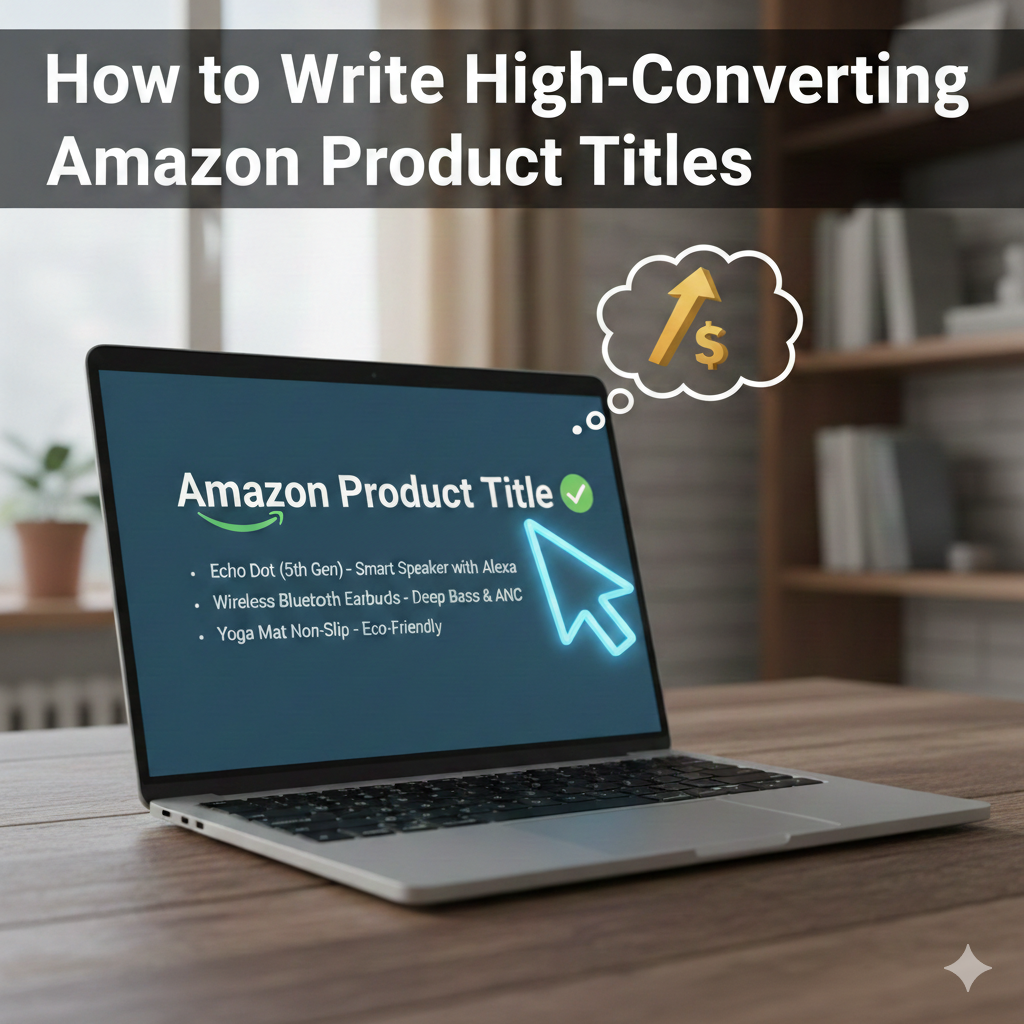
Writing an Amazon product title is not just about inserting keywords. It is about clearly communicating value, matching buyer intent, and helping Amazon’s algorithm understand exactly what you are selling. A strong title improves your search ranking, increases click-through rate, and directly impacts your conversion rate. In many cases, simply optimizing the title can dramatically improve sales without changing price, images, or ads.
This guide explains how to write Amazon product titles that both rank well and convince shoppers to click, using proven strategies that top-performing listings follow.
Why Amazon Product Titles Are So Important
Amazon product titles serve two audiences at the same time: the Amazon search algorithm and human shoppers. From an algorithmic perspective, Amazon uses the words in your title to determine keyword relevance and category placement. The closer your title matches a shopper’s search query, the more likely your product is to appear in relevant search results.
From a customer perspective, the title is often the deciding factor for whether they click your listing or choose a competitor’s. Shoppers scan search results quickly, especially on mobile devices, and rely on the title to understand what the product is, whether it meets their needs, and if it looks trustworthy. A clear, well-structured title builds confidence instantly, while a cluttered or confusing title pushes buyers away.
Understanding Amazon’s Title Guidelines
Before writing a title, it is essential to understand Amazon’s rules. Each category has its own style guide, but the general requirements are consistent across most product types. Titles should typically stay within 150 to 200 characters, avoid promotional language, and not use excessive capitalization or symbols. Claims such as “best seller,” “number one,” or “free shipping” are not allowed and can cause your listing to be suppressed.
Amazon also discourages keyword stuffing. Repeating the same phrase multiple times does not improve ranking and often harms conversion. The goal is relevance and readability, not keyword density. Following these guidelines ensures your listing remains compliant and performs well over time.
The Ideal Structure of a High-Converting Amazon Title
A high-converting Amazon title follows a logical structure that presents the most important information first. In most cases, this means starting with your brand name and primary keyword, followed by the most compelling features, and ending with size, quantity, or compatibility details.
This structure works because it aligns with how buyers read search results. They want immediate confirmation that the product matches their search, followed by quick reassurance that it has the features or benefits they care about. When information is ordered logically, shoppers do not need to think or guess, which increases the likelihood of a click.
Starting With the Right Keyword
The most important keyword for your product should appear near the beginning of the title. This keyword is usually the exact phrase shoppers type into Amazon when searching for your product. Placing it early helps Amazon understand relevance and helps shoppers instantly recognize that your listing matches their intent.
For example, if a shopper searches for “omega 3 fish oil capsules,” a title that starts with that phrase will perform far better than one that buries it in the middle. Early keyword placement improves visibility and increases click-through rate without sacrificing readability.
Including Your Brand to Build Trust
Branding matters on Amazon more than many sellers realize. Including your brand name in the title increases credibility and helps differentiate your product from generic alternatives. Even for newer brands, consistent branding builds recognition over time and improves long-term performance.
In most categories, placing the brand name at the beginning of the title is recommended. This signals professionalism and helps protect your listing from hijackers or copycat products. A clean brand-first title also looks more trustworthy to shoppers.
Highlighting Key Features That Drive Conversions
Your title should highlight one or two features that matter most to buyers. These features vary by category but often include strength, material, compatibility, or a primary benefit. The key is to focus on what actually influences purchasing decisions, not every possible attribute.
Overloading the title with too many features makes it difficult to read and reduces impact. A concise mention of the strongest selling point performs far better than a long string of adjectives. Your goal is clarity, not completeness. Additional details can be explained in bullet points and the product description.
Adding Size, Quantity, or Compatibility for Clarity
Clear size, quantity, or compatibility information reduces buyer hesitation and prevents confusion. When shoppers know exactly what they are getting, they are more likely to click and purchase. This is especially important in categories like supplements, electronics, and apparel.
Including details such as capsule count, pack size, dimensions, or device compatibility at the end of the title helps set accurate expectations. This not only improves conversions but also reduces returns and negative reviews.
Writing for Humans First, Not Just the Algorithm
One of the biggest mistakes sellers make is writing titles solely for Amazon’s algorithm. While keywords are important, readability and natural language are what convert shoppers into buyers. A title should sound like something a real person would say, not a list of search terms.
If your title feels awkward or difficult to read, it will likely underperform. Amazon’s algorithm rewards listings that get clicks and sales, so writing for humans ultimately improves SEO as well. A smooth, natural title that includes relevant keywords will always outperform a keyword-stuffed one.
Common Mistakes That Hurt Title Performance
Many sellers unknowingly damage their listings by repeating keywords, using unnatural phrasing, or ignoring mobile readability. Since most Amazon shoppers browse on mobile devices, long or cluttered titles are often truncated, hiding important information.
Another common mistake is making claims that are not allowed in the category, especially in supplements and health products. Even subtle violations can lead to suppressed listings. Staying compliant while remaining persuasive is essential for long-term success.
Testing and Improving Your Amazon Titles
Writing a strong title is not a one-time task. Amazon provides tools such as Manage Your Experiments that allow sellers to test different title variations. Monitoring click-through rate, conversion rate, and keyword ranking helps identify which titles perform best.
Even small changes, such as reordering words or emphasizing a different feature, can produce noticeable improvements. Regularly reviewing competitor listings and adjusting your title based on market trends keeps your product competitive.
Final Thoughts
A high-converting Amazon product title is clear, compliant, keyword-optimized, and written for real shoppers. It communicates value instantly, builds trust, and aligns perfectly with buyer intent. When done correctly, your title becomes one of the most powerful tools for increasing visibility and sales on Amazon.
If your listing is not performing as expected, optimizing the title should be your first step. In many cases, it delivers the highest return with the least effort.
If you want, I can also rewrite your existing Amazon titles, create category-specific title formulas, or optimize titles specifically for supplements, fashion, electronics, or private label brands. Just let me know.